
Renovating a small apartment on a tight budget: where to save and where not to
A tight budget isn't a problem, it's a frame. The problem is saving on the wrong things. Here are the savings you'll never feel, and the cuts that send you back to tearing out the apartment you just closed.
Updated July 2026 · Nur Renovations
The short answer
To renovate a small apartment on a budget, spend on what's buried behind the wall and never cut it: waterproofing, water and sewage pipes, and electrical infrastructure, because fixing them later means tearing out everything above them. Save instead on what's easily replaced without touching infrastructure: a standard tile shade, faucets, light fittings, interior doors and handles. There's no single cost figure; it depends on how many spaces you renovate, the condition of the existing infrastructure, and the extent of the wet work, and a real number is settled only after a site visit and a detailed BOQ.
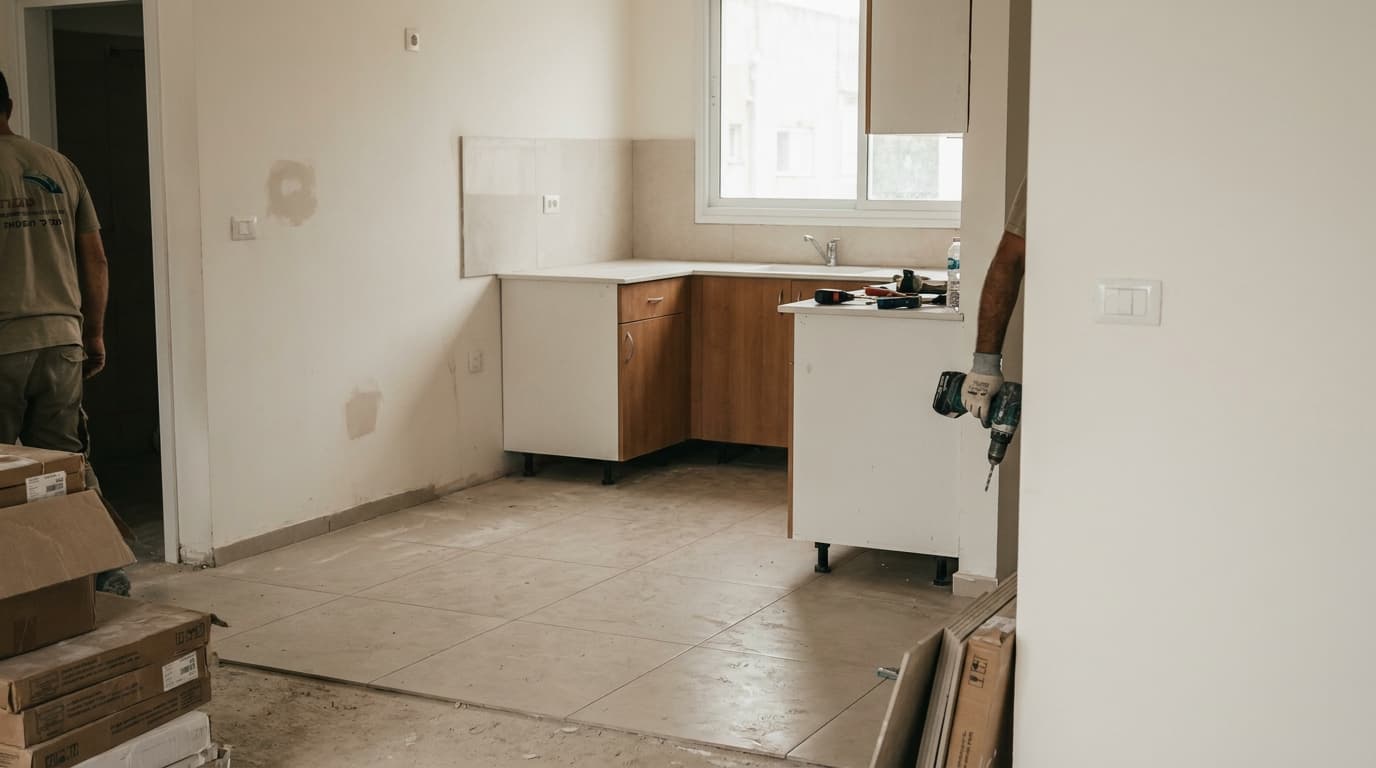
When the budget is tight, the right question isn't how to save on every line, but where saving won't come back to bite you. In a small apartment every decision shows immediately, both because the space is small and any flaw stands out, and because a later fix in a finished apartment is far more expensive and far messier than doing it right the first time.
There's a clear line that splits the renovation in two. On one side, anything you can swap, upgrade or defer at any moment: a faucet, a light fitting, an interior door, a tile shade, handles. On the other side, what's buried behind the wall and under the floor: waterproofing, water and sewage pipes, electrical points. The first side you can touch whenever you like. The second you can't go back to without tearing out everything above it.
In our work on small apartments that rule isn't a slogan, it's a work order. Waterproofing, plumbing and tiling are the core, we don't compromise on them, and that's where a documented flood test, double waterproofing and a written warranty on wet work come in. On everything else we help you save without feeling it two years from now. This guide explains where the line runs.
01The one rule: don't save on what's behind the wall
If you remember one thing from this guide, make it this: everything that gets buried behind a finish, waterproofing, pipes and wiring, is done once and has to last years. A finish can be replaced without touching the infrastructure. Infrastructure can't be fixed without destroying the finish. So saving on infrastructure isn't a saving, it's deferring a bigger expense.
The math is simple. A cheap faucet that breaks gets replaced in half an hour. Faulty bathroom waterproofing surfaces when the neighbor below knocks on the door, and then you tear out tiles, redo the waterproofing and retile, over fixtures that are already installed. The same logic holds for a pipe running through the wall and an electrical point buried in plaster. Today's saving becomes tomorrow's double work.
Watch out
The most dangerous line to cut is the least impressive one: waterproofing. It's invisible after tiling, it has no nice color, and you can't admire it. That's why it's the first thing cut, and the first thing to come back and sting.
02Where you really don't save
These are the items where a cut almost always translates into rework, damp, or a fault that puts the apartment out of use. In a small apartment they're also the relatively small part of the budget, so the gap between doing them right and doing them cheap is small in money and huge in outcome.
The wet room is the heart of it. Most leaks in an apartment don't come from a burst pipe but from waterproofing that failed in the bathroom. That's where a cove fillet at the wall-to-floor junction, waterproofing carried high enough up the shower wall, and a flood test before tiling come in. Whoever skips these sells you a room that looks finished and leaks quietly.
- Wet-room waterproofing: a cove fillet, a dedicated waterproofing layer, and a documented flood test before tiling
- Water and sewage pipes running through wall and floor: correct material and connections, since replacing later means opening walls
- Buried electrical infrastructure: enough points at the right gauge, so you don't break open plaster a year later
- Preparation before tiling: a screed, slopes to the drain, and a level base, because a good tile on a bad base fails
- Sealed work around the window and openings in the external wall, a common damp point that only shows in winter
03Where you can save without regret
Now the pleasant part. Much of what makes a small apartment renovation expensive is aesthetics and time, not function, and there's real room to save without hurting the work. The rule: anything you can replace in future without touching infrastructure, you can buy today in a modest version.
A standard tile shade in a common format costs far less than a special-order tile, and in a small apartment a large plain tile even looks better, because it reduces grout lines and opens up the space to the eye. Light fittings, faucets and handles are items swapped in minutes, so you can start with a reasonable version and upgrade when there's budget. Interior doors, cabinets and decorative finishes all sit on this side of the line.
There's room to save in the work itself too, without hurting quality. You can drop moving walls and changing a layout you don't have to, because every wall that moves drags electrical, plaster, paint and sometimes plumbing along with it. You can leave water and sewage points where they are when they're sound, instead of moving the bathroom or kitchen just for a different arrangement. Keeping the existing layout, when it makes sense, saves whole workdays that don't show in the final result but are very much felt in the bill.
Field tip
Smart saving is buying cheap on what's easily replaced, and putting the freed-up money into what's buried. A mid-range faucet with good pipes beats a luxury faucet with cheap pipes, every day.
04Reduce scope, not quality
If the budget doesn't stretch, the right way to cut is in scope, not in quality. Renovating fewer spaces properly beats renovating everything to a level that lasts two years. In a small apartment that comes down to one question: which space genuinely needs work now, and which can wait for phase two.
The wet room, if it's troubled, almost always comes first, because that's where the risk of ongoing damage sits. Tiling that's still intact and stable can sometimes be left, or tiled over instead of torn out, when that's professionally suitable. Painting, handles and finishes can be spread over time. That split between now and later is what a site visit helps settle, based on the apartment's condition rather than an assumption.
It's important to tell deferral apart from cutting. Deferral is leaving a space for phase two while it's in reasonable shape, without hurting what you do now. Cutting is doing that same space to a low standard just to tick it off. The first is legitimate and sometimes smart, the second almost always comes back. When you decide to defer a space, it's worth confirming it carries no active risk of damp or a fault, because a space that waits is one thing, and damage spreading while you wait is another thing entirely.
05False savings: cheap that comes out expensive
Some cuts look like a saving and actually make the renovation more expensive. The first is a low quote with no BOQ. A round, low price with no breakdown almost always hides items that get added mid-job, or a cheap material you didn't realize you were getting. A detailed BOQ isn't paperwork, it's your protection from surprises.
The second is a rotating contractor. A crew that shows up for a day, vanishes, and sends back different people who don't know the apartment costs you in time, in mistakes, and in a warranty with nowhere to turn. In a small apartment a fixed crew that knows the job from demolition to handover is what prevents most of the faults that make a renovation more expensive.
The third is skipping preparation for the sake of a pretty finish. Nice tiling on an unlevel screed, or tile on an out-of-plumb wall, looks good for a week and then starts showing open grout lines and crooked angles. Preparation is what holds the finish, and saving on it is a saving that falls apart in plain sight.
Watch out
An offer far cheaper than all the rest is usually not a deal, it's an incomplete quote. Ask what it doesn't include, and the difference is usually right there.
06The right order saves money on its own
In a small apartment the work order is a saving in itself. When each stage is closed and checked before the next begins, you don't go back to reopen finished work. Demolition, then plumbing and electrical, then waterproofing and a flood test, and only after that tiling, cladding and finishes. That order is what prevents the expensive double work.
The reverse of it, working from the end backwards or short-cutting stages to save a day, is what produces the repairs that inflate the bill. A workday saved by a shortcut is paid back several times over when you have to tear out and redo. Ordered planning up front, with decisions on materials and finishes before you start, cuts the mid-job changes that are the common source of going over budget.
07How to build a budget that holds
A budget that holds starts by separating must from optional. First you budget the infrastructure and wet work in full, those aren't up for negotiation. Only what's left gets divided among the finishes, and that's where you can choose economical versions or defer items to a later stage. That way the budget closes on the right things, instead of running out mid-job on nice extras.
It's also worth keeping a small reserve for things that only surface when you open a wall or floor, mainly in an older apartment: worn metal piping, old damp, or an unstable base. A reserve like that doesn't waste money, it prevents the moment when you find an infrastructure problem and have nothing left to fix it properly. A real number for your apartment is settled only at a site visit, because it depends on the existing condition rather than a general assumption.
Field tip
Any figure that appears without seeing the apartment is a ballpark range only. The real price depends on the condition of the existing infrastructure, so it's settled only after a visit and measurement.
Tight budget? Let's settle what you're paying for
A site visit, a clear split between what's a must and what can wait, and a transparent BOQ with a written warranty on wet work. No surprises mid-job.
Site visit & quote