
How much does a small apartment renovation cost? An honest per-m² breakdown
Everyone wants one number, and there isn't one. The cost of renovating a small apartment is set by how deep you go and by what's hiding behind the walls. This guide breaks the cost down per m², explains what moves it, and shows how to read a quote without surprises.
Updated July 2026 · Nur Renovations
The short answer
There's no single number. The cost of a small apartment renovation is set mainly by the depth of the work, from a cosmetic refresh to a full renovation down to the concrete with wet rooms, and by what's hiding behind the plaster: pipework, electrics, floor level and damp. The real figure for your apartment comes only after a site visit and a transparent BOQ that breaks every item out separately.
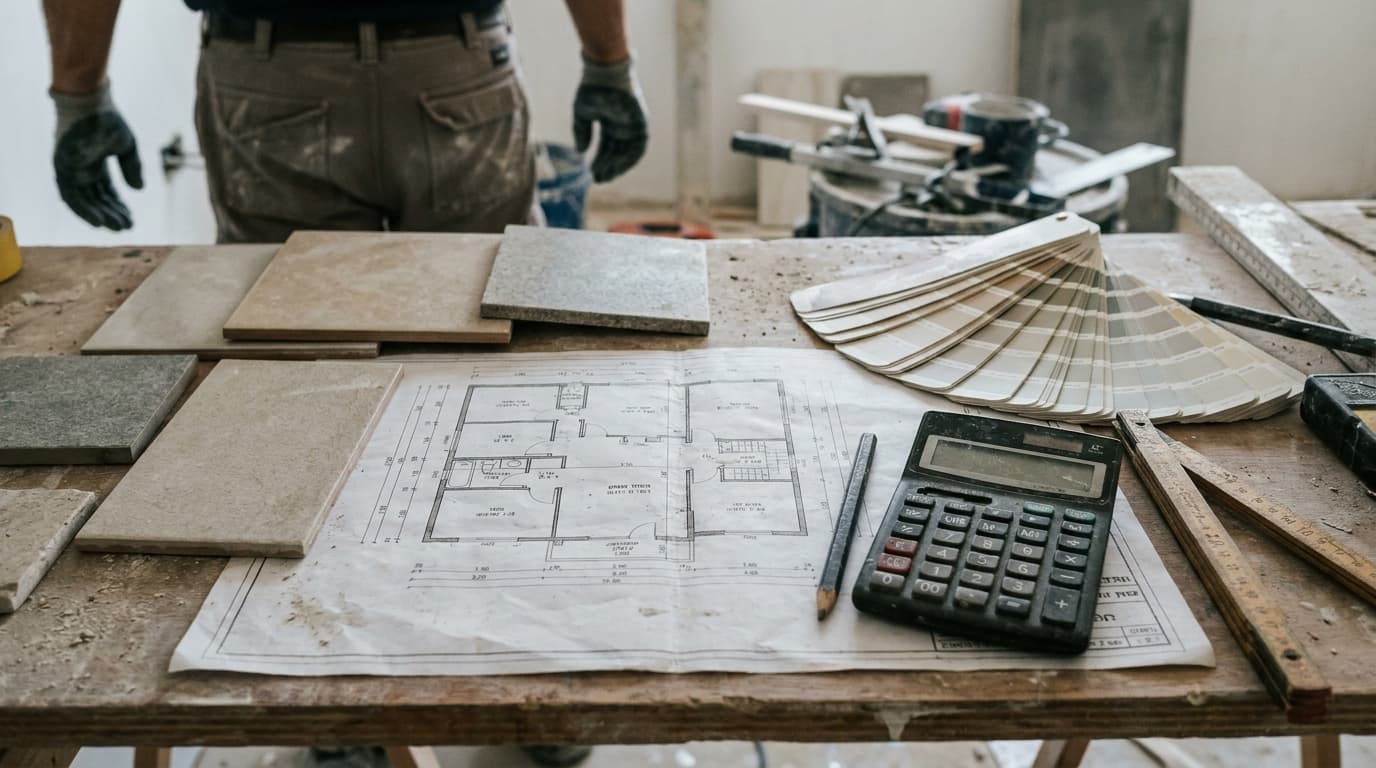
The first question we get on the phone is always the same: how much does it cost to renovate a small apartment. It's a fair question, but it has no single answer, because two apartments of the same size can be tens of thousands of shekels apart, depending on how deep you go and what condition the infrastructure is in behind the plaster.
Broadly, the cost of an apartment renovation is measured per m², but that per-m² figure changes dramatically between a light refresh and a full renovation that goes down to the concrete. A lot of people compare the per-m² price of a cosmetic job against one that replaces plumbing and electrics, and that comparison tells you nothing.
This guide breaks the cost down so you can estimate a rough range yourself before you call, and understand what actually moves the number. Every figure here is for guidance only, not a quote. We're a fixed crew that works with a transparent BOQ, a written warranty on wet work, and a price that comes only after a site visit, because without seeing the apartment any number is a guess.
01What actually goes into the price of an apartment renovation
Before we talk numbers, you have to understand that the price of a renovation is never just tiles and paint. It's made of several layers you don't see: demolition and waste removal, preparing the substrate, the wet work and plumbing, the electrics, and only at the end the finish you pick out at the shop.
The easiest part to price is the finish, because it has a price on the shelf. The part that surprises people is what's underneath: old pipework that needs replacing, electrics that don't handle today's load, a floor that needs leveling, or damp that shows up the moment a wall is opened. Those are the things that move the final number, and they're what you can't see from a photo.
That's why we work with a detailed BOQ that breaks every item out separately. That way you see what you're paying for, you can drop or add items to fit the budget, and you don't get one round number that can't be unpacked.
02Three levels of depth, three price ranges
The biggest difference in price isn't the size of the apartment but the depth of the work. The same 60 m² apartment can cost one figure if you only refresh it, and double or more if you go down to the concrete and replace the infrastructure. It's worth knowing which level you're at before you compare quotes.
A cosmetic refresh is the light level: paint, swapping fixtures without moving pipework, sometimes tiling over existing tile, replacing interior doors. You don't touch the infrastructure, so it's also the fastest and cheapest. It suits an apartment in reasonable shape that just needs freshening up.
A mid-level renovation is the most common in small apartments: replacing the flooring, redoing one or two bathrooms with full waterproofing, updating part of the plumbing and electrics, maybe a small layout change. This is where real wet work starts, which pushes the price up but also extends how long the renovation lasts.
A full renovation goes down to the concrete: tearing out all the flooring and cladding, fully replacing the water and waste pipes, a new electrical board and points, re-waterproofing all the wet spaces, and sometimes a layout change. It's the most expensive level per m², but it's also the one that leaves an apartment you won't need to touch again for years.
Field tip
When you compare two quotes, first make sure they describe the same depth of work. A quote that's much cheaper almost always describes shallower work, not a cheaper crew.
03Per-m² cost ranges: figures for guidance
Here are rough per-m² cost ranges by depth, so you can build a first estimate yourself. Note: every figure here is for guidance only, based on typical work in central Israel, and is not a quote. The real number for your apartment is set only at a site visit, after we see the infrastructure.
To translate this into a whole apartment, multiply the per-m² range by the apartment's area, then add the one-off items that don't divide neatly per m², like a full bathroom or a new electrical board. A small apartment tends to come out more expensive per m² than a large one, because the fixed jobs, the bathroom and the kitchen, are spread over fewer meters.
- Cosmetic refresh: for guidance only, the lowest of the three per m². No wet work and no infrastructure.
- Mid-level renovation with a bathroom and replaced flooring: for guidance only, higher, depending on the amount of wet work.
- Full renovation down to the concrete with new pipework and electrics: for guidance only, the highest of the three per m².
- A bathroom is its own item, priced separately, not per apartment m². For its cost breakdown see the bathroom cost guide.
Watch out
Be wary of a per-m² price promised on the phone without seeing the apartment. A number like that almost always ignores the infrastructure behind the plaster, and that's exactly where the surprises that inflate the bill midway hide.
04What moves the number up and down
Once you have a rough range, it's worth understanding what pushes it either way. Most of these things don't show up in a photo, which is why we insist on a site visit before any number.
What raises it: old pipework that needs a full replacement, an electrical board that can't handle the load and needs updating, an uneven floor that has to be leveled before tiling, existing damp that surfaces when a wall is opened, a layout change that means knocking down walls, and difficult access to an apartment on a high floor with no lift, which raises the cost of waste removal and carrying materials up.
What lowers it: keeping the existing layout without moving walls, tiling over existing tile when the condition allows, leaving the pipework and points where they are, and choosing a finish in the reasonable range instead of a luxury item. Every item you can leave as-is saves on both labor and material.
The finish level is a variable on its own. The same tiling work can cost very differently depending on the tile you pick out at the shop, and that part is fully in your control. We always separate labor cost from material cost in the BOQ, so you can play with the finish without it muddying the labor price.
06How to read a quote without getting caught out
The difference between a good quote and a bad one isn't the number at the bottom but how detailed it is. A quote that sums everything up in one line, apartment renovation, an amount, tells you very little and leaves a lot of room for surprises midway.
A good quote breaks the work into items: demolition and removal, plumbing, electrics, waterproofing, tiling and cladding, paint, finish. Each item has a quantity and a price, with labor cost separated from the cost of the material you buy. That way you see what you're paying for, you can compare quotes item by item, and drop or add to fit the budget.
It's also worth checking what isn't written: whether waste removal is included, whether there's a written warranty on wet work, and what happens if an infrastructure surprise turns up midway. A transparent quote addresses these up front instead of leaving them to an argument on site.
Field tip
Always ask for labor cost and material cost to be separated in the BOQ. That separation alone tells you a lot about how transparent the crew is, and it's what lets you play with the finish without touching the labor price.
07Why a real price only comes after a site visit
You can get a rough range on the phone, and that's fine for a first feasibility check. But a real price, one we can stand behind, requires seeing the apartment: the state of the plumbing and electrics, how level the floor is, the condition of the wet walls, and the access to the apartment.
A site visit takes us an hour and it's what separates a guess from a quote. On the visit we measure, open test points where needed, and understand what's hiding behind the plaster before we commit to a number. That way the quote you get is realistic, with fewer surprises midway through the renovation.
After the visit you get a detailed BOQ with clear price ranges, a written warranty on wet work, and a fixed crew that sees the apartment through from demolition to handover. That's the basis that lets us stand behind the price, rather than just throwing out a number on the phone.
Want a real number for your apartment?
A one-hour site visit, measuring and an infrastructure check, and a detailed BOQ with clear price ranges and a written warranty on wet work. No inflated number over the phone.
Site visit & quote